The Role of Third-Party Inspections vs. In-House QC Teams: Which Is Right for Your Supply Chain?
As global brands shift more production to Vietnam, the pressure to maintain consistent product quality has never been higher. Whether you manufacture garments, furniture, home goods, footwear, or electronics, choosing the right quality-control structure can make or break your supply chain.
Two options dominate: in-house QC teams and third-party inspection companies. Both offer unique advantages, but the right choice depends on your production volume, supplier relationships, and risk tolerance.
In-House QC Teams: Control, Continuity, and Internal Knowledge
Many brands build their own QC departments to maintain close oversight of their factories. An in-house team can:
Maintain ongoing supervision
Your inspectors become deeply familiar with your product specifications, supplier tendencies, and recurring quality issues.
Provide immediate feedback
Because they work directly for you, internal inspectors can quickly implement new quality procedures or escalate concerns.
Strengthen long-term supplier partnerships
A consistent QC presence fosters better cooperation and alignment with production goals.
However, in-house inspections can be costly and difficult to scale, especially for companies sourcing from multiple Vietnamese factories at once.
For buyers working with several suppliers, a third-party QC model like ours at Quality Control Inspections Vietnam offers a more flexible approach.
Third-Party Inspections: Independent, Scalable, and Cost-Effective
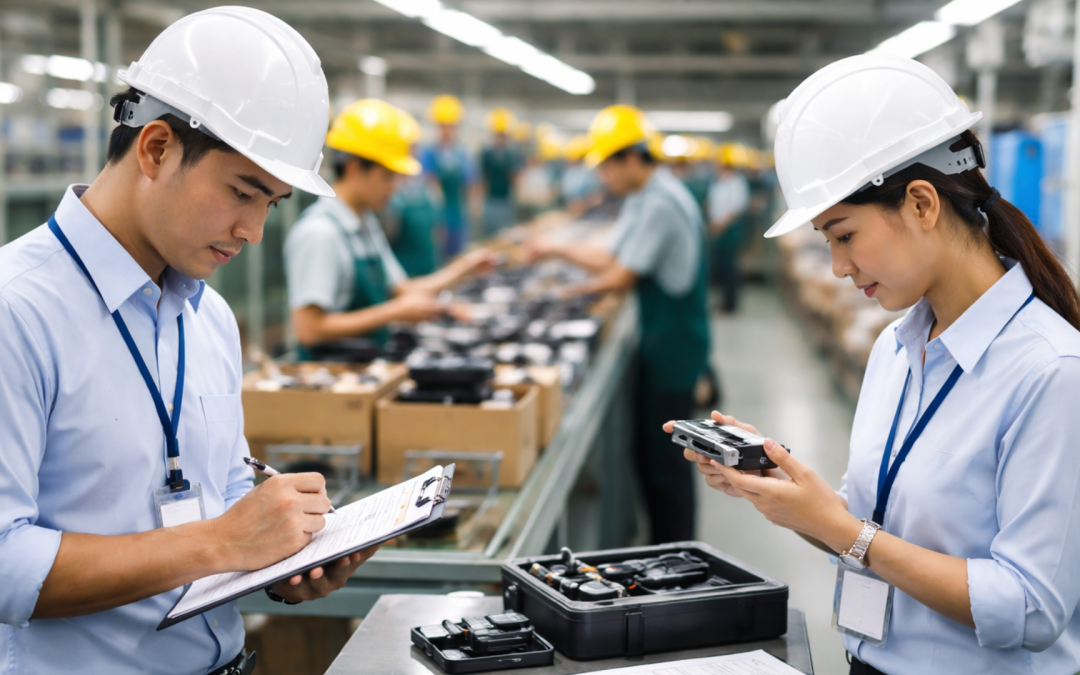
A third-party inspection company in Vietnam performs professional checks on your behalf at any factory, anywhere in the country. This approach provides several advantages:
True independence
A neutral, external QC inspector has no ties to the factory which reduces the risk of biased reporting or hidden issues.
Scalable quality control
Whether you need one inspection per quarter or ten per week, inspection capacity can scale instantly.
Lower overhead
You avoid having to pay full-time salaries, training costs, travel expenses, and equipment when utilizing a third-party inspector.
Access to local expertise
A Vietnam-based inspection company understands:
- local manufacturing realities
- common quality issues by product category
- regional challenges (HCMC, Bình Dương, Hanoi, Da Nang, Đồng Nai)
- how to enforce AQL sampling properly
Cost Comparison: In-House QC vs. Third-Party Inspection
In-House QC Costs Include:
-
Salaries
- Training
- Travel costs between factories
- Annual audits
- Equipment (calipers, gauges, testing tools)
- Accommodation for inspectors if factories are remote
Third-Party QC Costs Include:
-
Flat inspection fee
- No long-term commitments
- No employment overhead
- All equipment supplied by the inspection company
For small and mid-size importers, third-party Quality Control in Vietnam often delivers superior value at a fraction of the cost. If you want to learn more about our transparent pricing contact us today.
When In-House QC Makes More Sense
An internal QC team may be best if:
- You produce extremely high volumes in only one or two factories
- You require real-time oversight of every production stage
- You maintain long-term, stable manufacturing partnerships
- Your products require highly specialized testing not offered by external inspectors
In this scenario, you may still use third-party teams for audits, pre or mid-production inspections, or supplier verification, especially when expanding to new suppliers.
When Third-Party QC Is the Better Choice
A third-party inspection model is ideal if:
- You work with multiple factories across Vietnam
- Your production volumes fluctuate seasonally
- You need unbiased reporting
- You want to compare suppliers objectively
- You require fast coverage in HCMC, Hanoi, Da Nang, Bình Dương, Đồng Nai, or Bắc Ninh
- You’re facing or want to avoid quality inconsistencies or defect issues
If this sounds like your situation, our team in Vietnam can help you reduce defects, prevent delays, and ensure product quality before shipments leave the factory.
Hybrid Models: The Best of Both Worlds
Some brands choose to combine the two:
Internal QC handles:
- High-level product development
- Spec creation
- Supplier training
- Process checks at the beginning of production
Third-party QC handles:
-
Pre-production inspections
- Mid-production inspections
- Pre-shipment inspections (PSI)
- Final Random Inspections
- Container loading checks
- Ongoing supplier audits
Blending the strengths of internal and external QC provides maximum coverage with minimal cost.
Learn how our inspection team supports hybrid QC systems.
So Which Option Is Right for Your Supply Chain?
There’s no one-size-fits-all solution, for most importers today, the flexibility, independence, and affordability of third-party inspections in Vietnam make it the smarter choice.
If you’re exploring how third-party QC can strengthen your production in Vietnam, our team is ready to help. Contact us today for transparent pricing and fast inspection coverage across the country.
Recent Comments